Guide
Sunscreen by the clock
A first layer before you leave, and a fresh one every two hours outdoors.
Before you go out
Put the first layer on indoors. Skin needs a little time with it before the sun does.
A morning layer under makeup is the easy one to keep. An essence with a makeup-base line on its label fits that slot.
“It takes approximately 15 minutes for your skin to absorb the sunscreen and protect you.”
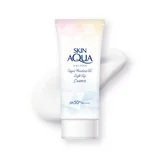
Every two hours
Outdoors, one layer is not a day’s work. Dermatologists set the gap at about two hours, and sooner after water or sweat.
Rohto’s directions for Skin Aqua give the same rhythm: reapply every two to three hours, and towel off sweat first.
When to put on the next layer
Dermatologists advise a fresh layer about every two hours outdoors. Choose your start.
First layer at
- 11 am
- 1 pm
- 3 pm
- 5 pm
- 7 pm
Reapply at once after swimming, sweating or toweling off.
“To remain protected when outdoors, reapply sunscreen every two hours, and immediately after swimming or sweating.”
The middle of the day
The sun is strongest when it is highest. You do not need an app to know when that is.
Water, sand and snow send light back at you, so shade by a pool is not full shade.
“If your shadow is shorter than you are (around midday), you are being exposed to higher levels of UV radiation.”
“Keep in mind that UV radiation is reflected by sand, water, snow, and ice and can go through windshields and windows.”
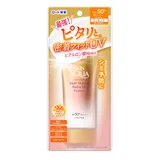
At a UV index of three
Weather apps show a UV index. The CDC draws the line at three.
“When the UV index is 3 or higher in your area, protect your skin from too much exposure to the sun.”
Questions
In short
How long before going outside should you apply sunscreen?
About 15 minutes, by the American Academy of Dermatology’s figure. A thin gel such as the UV Super Moisture Gel Twin Pack dries well within that time, buyers report.
How often should you reapply sunscreen?
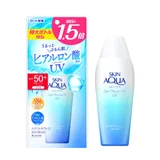
About every 2 hours outdoors, and at once after swimming or sweating, by dermatologists’ advice. A pump such as the Super Moisture UV Gel 165 g makes the second layer quick.
Sources
- How to apply sunscreenread 10 October 2026 · American Academy of Dermatology
- UV Index Scaleread 10 October 2026 · U.S. Environmental Protection Agency
- Cancer Risk Factors: Sunlight - NCIread 10 October 2026 · National Cancer Institute (NIH)
- Sun Safety Factsread 10 October 2026 · Centers for Disease Control and Prevention
General information for shoppers, not medical advice. For questions about your skin or sun exposure, ask a doctor or pharmacist.
Keep reading
More guides
How to read a Japanese sunscreen label
SPF50+, PA++++ and the stars, one mark at a time.
How much sunscreen you need
One ounce for a body, a teaspoon for a face.
Gel or essence: which form to choose
A gel for the body, an essence for the face.